Mission to Mars

Facebook
Twitter
LinkedIn

Mission to Mars

Over the past four years, the UAE has been impacted by geopolitical tensions and challenges including a decline in the performance of the global economy, slowing global trade and uncertainty over world economic policies.

SPONSERED BY

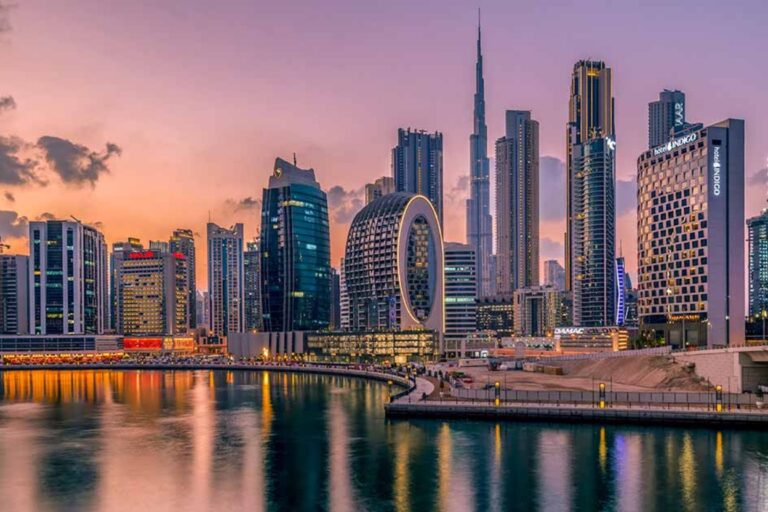
From the orange sands of Dubai to the red dust of Mars. Having revitalised its desert economy, the UAE is now aiming to become a major player in space.

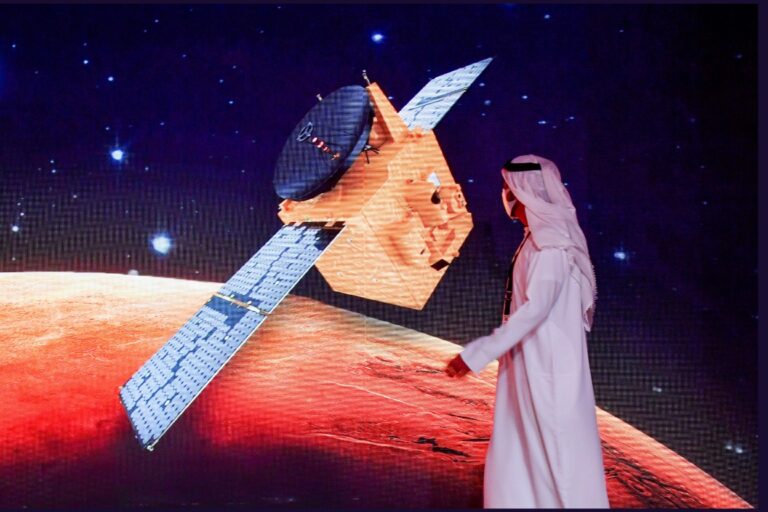
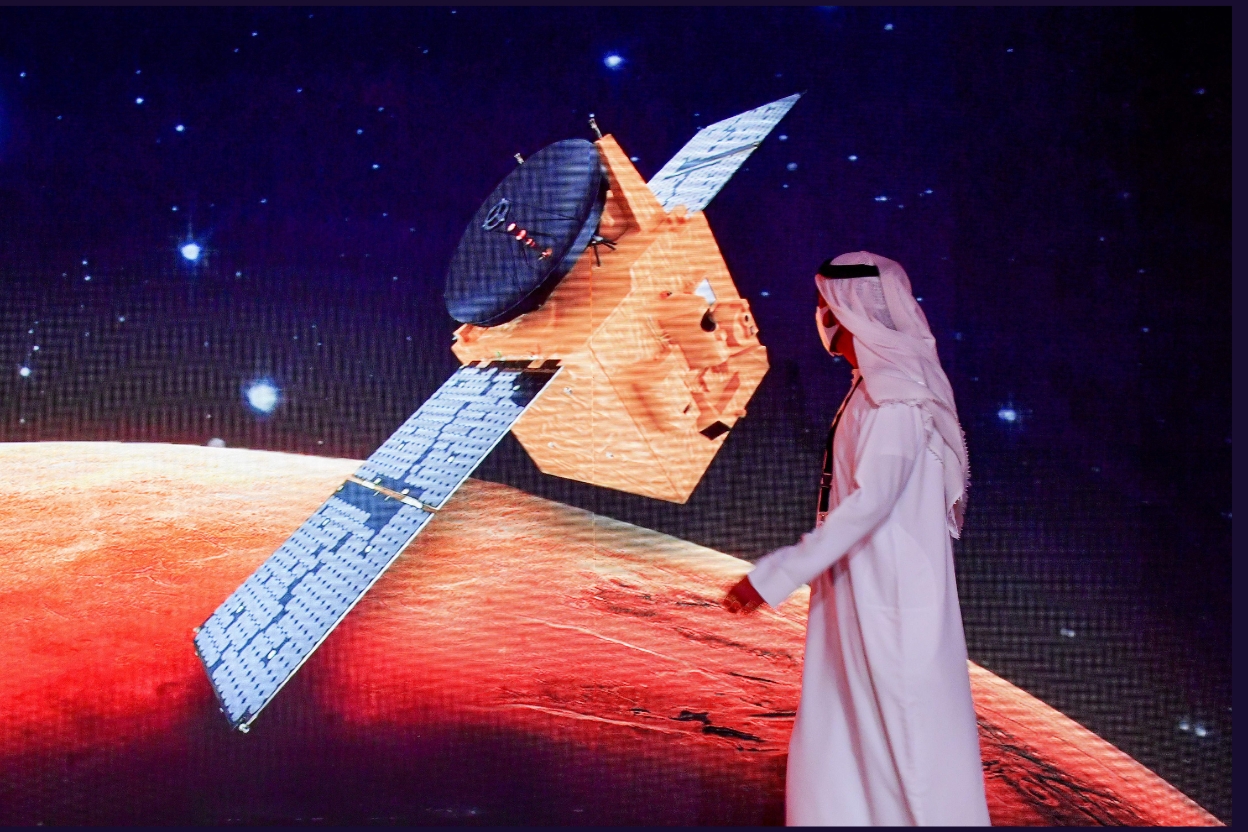
While the UAE Space Agency is only four years old, it is already involved in the Mars mission of the Hope spacecraft, which is scheduled to arrive on the red planet in 2021 to mark the 50th anniversary of the founding of the UAE.

Before that, the UAE will send an astronaut to the International Space Station next year. In addition, it has launched the Mars Science City project, a $140 million research city that will serve as a “viable and realistic model” for the simulation of human occupation of the Martian landscape.

The UAE Space Agency is also in talks with the UK Space Agency about a joint venture based in the UAE that will enable satellites to be used in emergencies, such as earthquakes and other disasters.

Closer to home, it is helping Saudi Arabia to establish its own space agency, having already aided the development of Bahrain’s space agency. The UAE Space Agency is also working with Egypt and other countries in the region.

In investment terms, the space industry is potentially very lucrative. The global space industry is valued at $360 billion according to the Global Space Industry Market and Technology Forecast to 2026 and is expected to grow to $556 billion by 2026, fuelled by the procurement of satellite systems by countries in the Asia Pacific, European and North American regions.


Yet how is space exploration contributing to the technological richness and diversity of the modern UAE?

Dr Mohammed Al Ahbabi, director general of the UAE Space Agency, firmly believes that the development of the UAE space programme has a vital part to play in helping the nation flex its muscles as a major international economy, enhancing national capabilities and nurturing a promising hotbed of scientific talent.

“We are the first space agency in the Middle East, and now we have the first Arab and Islamic mission to Mars,” he says.

“The amount that has been invested in this space capability over the past 20 years is around $6 billion, and we are achieving an annual 7 per cent growth in the UAE space market. About 500 people are working in space activity in the UAE and 30 per cent of them are women.

“What we’re doing is strategic, economic and scientific. It’s a fascinating time for the UAE and we have a lot of extensive and significant projects being implemented at the same time.”

Founded in 2014 with the task of developing, fostering and regulating a sustainable and world-class sector, the UAE Space Agency has carefully defined its limits and also its opportunities.

“When I was tasked with my team to develop the UAE Space Agency, I looked at what would be the best model and the one that we are closest to is the UK Space Agency,” says Dr Al Ahbabi.

“We are a small space agency with about 50 direct employees. We don’t operate satellites ourselves but we are a facilitator, coordinator and integrator and we also work as a funding agency, essentially as a window for international cooperation. This is a very light, agile and efficient space agency. We have decided not to be big. We want to start with something small and grow.”

Seven satellites are operated in the UAE and later this year will see the launch of an eighth, the KhalifaSat, a remote sensing, earth observation imaging satellite that is being manufactured in the UAE at the Mohammed bin Rashid Space Centre in Dubai.

The first satellite to be built in the clean rooms of the Dubai government’s space science and research facility, it has been developed entirely by a team of Emirati engineers.

After its launch in Japan, it will be in situ for five years, providing high-resolution imagery of the earth for use in urban planning, environmental and climate change monitoring, area classification and aiding relief efforts for natural disasters.

‘It’s a great testament to the capabilities of the UAE,” says Dr Al Ahbabi. “The UAE is now not only a user of satellites but also makes them.”

Meanwhile, the effort to put the first UAE astronaut in space on a Soyuz spacecraft next year to conduct experiments on the International Space Station has received 4,000 applications, including 1,500 women.

The selection is now down to the final nine candidates, who have been undergoing medical tests and training in Russia.

Four astronauts are expected to be selected later this year, creating a pool from which the first and later missions will be crewed.

“There’s a lot of excitement and we hope it will inspire our young people in their education, similar to the way that Tim Peake has inspired people in the UK.” says Dr Al Ahbabi.

The Mars mission will aim to collect data using the Hope spacecraft, a compact hexagonal craft of the same size and weight as a small car. It will launch in 2020 and arrive at the red planet in early 2021.

“Our space programme is comprehensive now,” says Dr Al Ahbabi. “We have space exploration, space services and satellites and now we have human space flights as well. 

“We are often asked why space and why the UAE and why at this particular time, but the answer is very easy. The UAE is developing and we want to demonstrate this by taking the lead with a vision for the region.’’

“We are trying to influence neighbouring countries by undertaking projects in space, nuclear energy, aviation, tourism, real estate, shopping malls; all these things,’’ added Dr Al Ahbabi. “We’re trying to show the positive side of the region and demonstrate that we can be a good global citizen and change the image of this region with science and technology. Our space programme has an excellent capability for the future and is a significant tool to prepare our society and inspire our young people in science and technology.”

Collaboration agreements have been forged with local and international partners, with more than 25 space cooperation agreements signed with other space agencies.  

The UAE plays an active role in United Nations space regulations and has joint projects with space agencies including NASA, Roscosmos and The Japan Aerospace Exploration Agency (JAXA) and The Centre National d’Etudes Spatiales (CNES) in France. Collaboration with the UK Space Agency is next on the agenda.

“We are speaking to the UK Space Agency about some small projects in remote sensing and disaster management,’’ says Dr Al Ahbabi. “As part of these discussions, we may establish a joint centre in the UAE to exchange data and information. Other areas where we are working with international partners are in education, space regulation and human space tourism. Space is all about cooperation. In the past, countries used to compete in space but the trend recently has been a change from competition to collaboration,’’ says Dr Al Ahbabi.

“We try to utilise international partners and cooperation and we also try to utilise the private sector and bring it in as a contributor to space activity.”

Space is not a linear business, with uneven flows of activity, but Dr Ahbabi is patient. “There is a big satellite launch and then the next year there is nothing,” he says. “Satellites can cost between $400-$500 million, so these are big projects. However, over the next five to ten years, we see significant growth. We are making a significant investment. Our message to our region and to the rest of the world is that this is possible.”

Tags:

What do you think?

UAE is diversifying to win in the global economy. It is a pivotal time for
The UAE reinforces itself as an investment destination of choice as it transitions into a

From the orange sands of Dubai to the red dust of Mars. Having revitalised its desert economy, the UAE is now aiming to become a major player in space.

While the UAE Space Agency is only four years old, it is already involved in the Mars mission of the Hope spacecraft, which is scheduled to arrive on the red planet in 2021 to mark the 50th anniversary of the founding of the UAE.

Before that, the UAE will send an astronaut to the International Space Station next year. In addition, it has launched the Mars Science City project, a $140 million research city that will serve as a “viable and realistic model” for the simulation of human occupation of the Martian landscape.

The UAE Space Agency is also in talks with the UK Space Agency about a joint venture based in the UAE that will enable satellites to be used in emergencies, such as earthquakes and other disasters.

Closer to home, it is helping Saudi Arabia to establish its own space agency, having already aided the development of Bahrain’s space agency. The UAE Space Agency is also working with Egypt and other countries in the region.

In investment terms, the space industry is potentially very lucrative. The global space industry is valued at $360 billion according to the Global Space Industry Market and Technology Forecast to 2026 and is expected to grow to $556 billion by 2026, fuelled by the procurement of satellite systems by countries in the Asia Pacific, European and North American regions.


Yet how is space exploration contributing to the technological richness and diversity of the modern UAE?

Dr Mohammed Al Ahbabi, director general of the UAE Space Agency, firmly believes that the development of the UAE space programme has a vital part to play in helping the nation flex its muscles as a major international economy, enhancing national capabilities and nurturing a promising hotbed of scientific talent.

“We are the first space agency in the Middle East, and now we have the first Arab and Islamic mission to Mars,” he says.

“The amount that has been invested in this space capability over the past 20 years is around $6 billion, and we are achieving an annual 7 per cent growth in the UAE space market. About 500 people are working in space activity in the UAE and 30 per cent of them are women.

“What we’re doing is strategic, economic and scientific. It’s a fascinating time for the UAE and we have a lot of extensive and significant projects being implemented at the same time.”

Founded in 2014 with the task of developing, fostering and regulating a sustainable and world-class sector, the UAE Space Agency has carefully defined its limits and also its opportunities.

“When I was tasked with my team to develop the UAE Space Agency, I looked at what would be the best model and the one that we are closest to is the UK Space Agency,” says Dr Al Ahbabi.

“We are a small space agency with about 50 direct employees. We don’t operate satellites ourselves but we are a facilitator, coordinator and integrator and we also work as a funding agency, essentially as a window for international cooperation. This is a very light, agile and efficient space agency. We have decided not to be big. We want to start with something small and grow.”

Seven satellites are operated in the UAE and later this year will see the launch of an eighth, the KhalifaSat, a remote sensing, earth observation imaging satellite that is being manufactured in the UAE at the Mohammed bin Rashid Space Centre in Dubai.

The first satellite to be built in the clean rooms of the Dubai government’s space science and research facility, it has been developed entirely by a team of Emirati engineers.

After its launch in Japan, it will be in situ for five years, providing high-resolution imagery of the earth for use in urban planning, environmental and climate change monitoring, area classification and aiding relief efforts for natural disasters.

‘It’s a great testament to the capabilities of the UAE,” says Dr Al Ahbabi. “The UAE is now not only a user of satellites but also makes them.”

Meanwhile, the effort to put the first UAE astronaut in space on a Soyuz spacecraft next year to conduct experiments on the International Space Station has received 4,000 applications, including 1,500 women.

The selection is now down to the final nine candidates, who have been undergoing medical tests and training in Russia.

Four astronauts are expected to be selected later this year, creating a pool from which the first and later missions will be crewed.

“There’s a lot of excitement and we hope it will inspire our young people in their education, similar to the way that Tim Peake has inspired people in the UK.” says Dr Al Ahbabi.

The Mars mission will aim to collect data using the Hope spacecraft, a compact hexagonal craft of the same size and weight as a small car. It will launch in 2020 and arrive at the red planet in early 2021.

“Our space programme is comprehensive now,” says Dr Al Ahbabi. “We have space exploration, space services and satellites and now we have human space flights as well. 

“We are often asked why space and why the UAE and why at this particular time, but the answer is very easy. The UAE is developing and we want to demonstrate this by taking the lead with a vision for the region.’’

“We are trying to influence neighbouring countries by undertaking projects in space, nuclear energy, aviation, tourism, real estate, shopping malls; all these things,’’ added Dr Al Ahbabi. “We’re trying to show the positive side of the region and demonstrate that we can be a good global citizen and change the image of this region with science and technology. Our space programme has an excellent capability for the future and is a significant tool to prepare our society and inspire our young people in science and technology.”

Collaboration agreements have been forged with local and international partners, with more than 25 space cooperation agreements signed with other space agencies.  

The UAE plays an active role in United Nations space regulations and has joint projects with space agencies including NASA, Roscosmos and The Japan Aerospace Exploration Agency (JAXA) and The Centre National d’Etudes Spatiales (CNES) in France. Collaboration with the UK Space Agency is next on the agenda.

“We are speaking to the UK Space Agency about some small projects in remote sensing and disaster management,’’ says Dr Al Ahbabi. “As part of these discussions, we may establish a joint centre in the UAE to exchange data and information. Other areas where we are working with international partners are in education, space regulation and human space tourism. Space is all about cooperation. In the past, countries used to compete in space but the trend recently has been a change from competition to collaboration,’’ says Dr Al Ahbabi.

“We try to utilise international partners and cooperation and we also try to utilise the private sector and bring it in as a contributor to space activity.”

Space is not a linear business, with uneven flows of activity, but Dr Ahbabi is patient. “There is a big satellite launch and then the next year there is nothing,” he says. “Satellites can cost between $400-$500 million, so these are big projects. However, over the next five to ten years, we see significant growth. We are making a significant investment. Our message to our region and to the rest of the world is that this is possible.”

Tags:

What do you think?

Related Insights