UAE Property Market Opts for Community Spirit

Facebook
Twitter
LinkedIn

UAE Property Market Opts for Community Spirit

Over the past four years, the UAE has been impacted by geopolitical tensions and challenges including a decline in the performance of the global economy, slowing global trade and uncertainty over world economic policies.

SPONSERED BY

By Dominic Gill

Sell: Glamorous and up-market property developments in the UAE have set a benchmark to the world’s property developers, but what’s planned next…

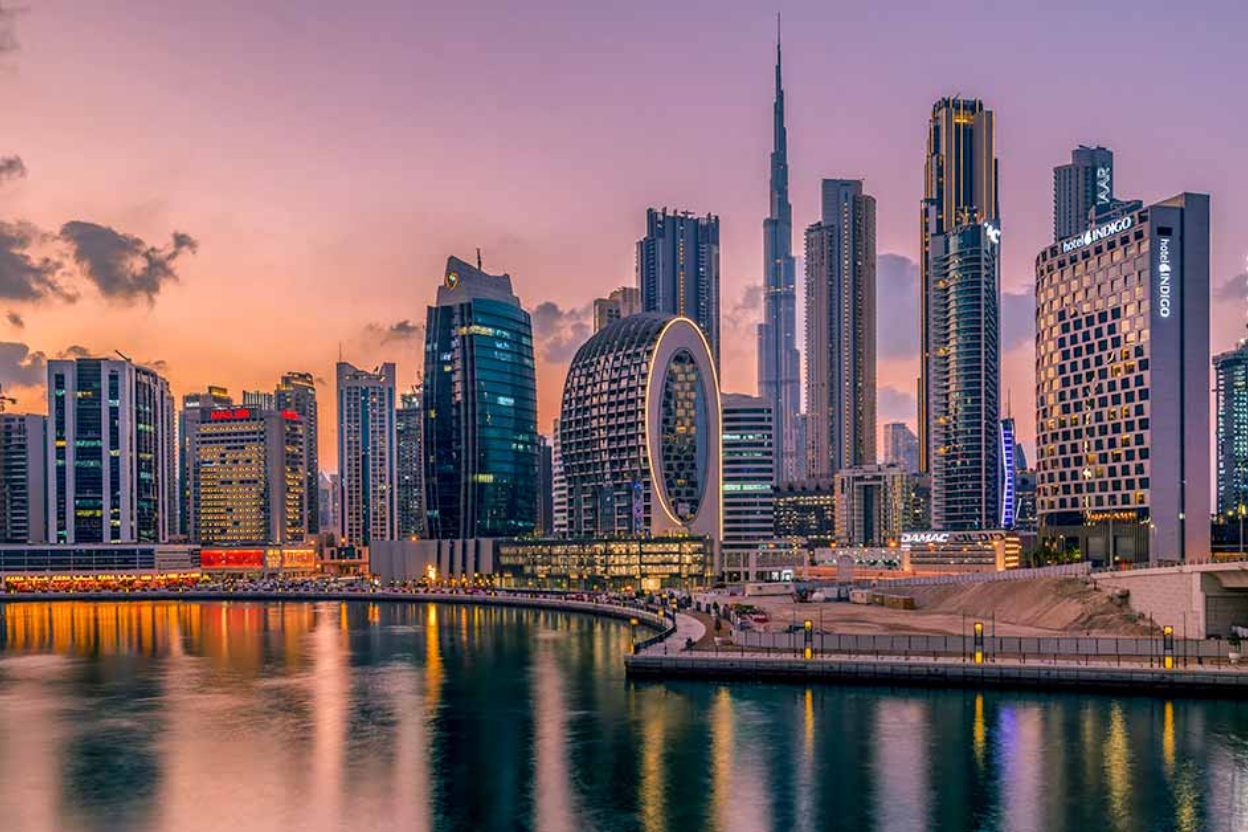
The UAE has long been known for cutting-edge property developments, with Dubai’s luxury schemes at The Palm and The World having been well-publicised for their ambition and celebrity owners as well as for the mini-exodus that followed the 2008 global financial crisis.

Less is known outside the UAE about Abu Dhabi’s claims in the global luxury residential market and the changing appetites of buyers. However, that is set to change rapidly. 

Talal al Dhiyebi, chief executive of Aldar Properties, says that, while quality remains a priority, the company is seeing a trend to develop real estate that appeals to a broader range of the buyer spectrum…

“For homeowners and tenants alike, it is all about the quality; an enriching experience and lifestyle – a place you call home,” he says.

“This demands urban amenities, a sense of community, convenience of location and facilities, good views and maintenance services.

“People increasingly are looking to live in communities which offer more than just homes.”

It is fair to say that this is not what UAE residential property is best-known for outside the nation.

Privacy, rather than community, status rather than convenience and prestige over practicality have previously been dominant perceptions, even if these did not always reflect reality.

 The trend is, therefore, to deliver desirable destinations by creating whole communities equipped with urban amenities that provide residents with an enriched living experience through comfort, accessibility and convenience.

For example, Aldar’s Alghadeer master development includes convenience-driven amenities such as a British curriculum international school, a supermarket and a community clinic.      

The perceived attractiveness of UAE residential property is also evolving. With GDP per capita estimated at $75,000 per person, a population that increased by 70 per cent between 2008 and 2015, rapid urbanisation and a growing reputation as a leisure, entertainment and cultural hub, Abu Dhabi was last year ranked as the second best city in the world to live in after New York by the Ipsos City Index 

Aldar cites interest from investors in Saudi Arabia, India, China and Russia, as well as to the UK, which accounts for five per cent of the company’s buyers.

Yet the investor case is not always attractive in relation to other options. In 2017, property consultants Knight Frank ranked Abu Dhabi last and Dubai 134th out of 150 global cities for property price performance.

Abu Dhabi prices slumped 9 per cent last year, according to the agency’s annual rankings, while Dubai suffered a 2 per cent dip.

The flip side of this is increased global competitiveness going forward, with Knight Frank finding in September 2017 that Dubai’s average tower rents were seven times cheaper than similar properties in Hong Kong.

The consultancy also found that the upper floors of Dubai tower blocks over 30 storeys tall did not command premiums over lower floors, as is common in Hong Kong, New York and some other world cities.

The stated reason was again that occupier priorities in the Emirate are increasingly focused on the efficiency of the property floorspace, amenities, the speed of the lifts and the location of the building. 

Change in UAE property happens slowly, with market fundamentals in Abu Dhabi governed through controls on property supply and the 2016 Real Estate Law, which laid down benchmarks for a fair and transparent property market and introduced master developer licenses.

However, the UAE government recently pledged a $13.6 billion stimulus package to help fund capital projects for a three-year plan to support economic activity through the creation of 10,000 jobs. 

The introduction of VAT does not appear to have quelled demand, while the new rules for visas are expected to have a positive effect in boosting demand from overseas.

The issue is how Abu Dhabi and Dubai property is perceived overseas and the effect that this has on domestic prices and affordability.

If the focus truly switches from out-towering the most recent tallest building to providing homes that people want to build communities around, talk about sustainability in the UAE property market may finally be justified.

First, the nation’s biggest cities must escape the cycle of boom and bust that has caused instability in the past.

Tags:

What do you think?

UAE is diversifying to win in the global economy. It is a pivotal time for
The UAE reinforces itself as an investment destination of choice as it transitions into a

By Dominic Gill

Sell: Glamorous and up-market property developments in the UAE have set a benchmark to the world’s property developers, but what’s planned next…

The UAE has long been known for cutting-edge property developments, with Dubai’s luxury schemes at The Palm and The World having been well-publicised for their ambition and celebrity owners as well as for the mini-exodus that followed the 2008 global financial crisis.

Less is known outside the UAE about Abu Dhabi’s claims in the global luxury residential market and the changing appetites of buyers. However, that is set to change rapidly. 

Talal al Dhiyebi, chief executive of Aldar Properties, says that, while quality remains a priority, the company is seeing a trend to develop real estate that appeals to a broader range of the buyer spectrum…

“For homeowners and tenants alike, it is all about the quality; an enriching experience and lifestyle – a place you call home,” he says.

“This demands urban amenities, a sense of community, convenience of location and facilities, good views and maintenance services.

“People increasingly are looking to live in communities which offer more than just homes.”

It is fair to say that this is not what UAE residential property is best-known for outside the nation.

Privacy, rather than community, status rather than convenience and prestige over practicality have previously been dominant perceptions, even if these did not always reflect reality.

 The trend is, therefore, to deliver desirable destinations by creating whole communities equipped with urban amenities that provide residents with an enriched living experience through comfort, accessibility and convenience.

For example, Aldar’s Alghadeer master development includes convenience-driven amenities such as a British curriculum international school, a supermarket and a community clinic.      

The perceived attractiveness of UAE residential property is also evolving. With GDP per capita estimated at $75,000 per person, a population that increased by 70 per cent between 2008 and 2015, rapid urbanisation and a growing reputation as a leisure, entertainment and cultural hub, Abu Dhabi was last year ranked as the second best city in the world to live in after New York by the Ipsos City Index 

Aldar cites interest from investors in Saudi Arabia, India, China and Russia, as well as to the UK, which accounts for five per cent of the company’s buyers.

Yet the investor case is not always attractive in relation to other options. In 2017, property consultants Knight Frank ranked Abu Dhabi last and Dubai 134th out of 150 global cities for property price performance.

Abu Dhabi prices slumped 9 per cent last year, according to the agency’s annual rankings, while Dubai suffered a 2 per cent dip.

The flip side of this is increased global competitiveness going forward, with Knight Frank finding in September 2017 that Dubai’s average tower rents were seven times cheaper than similar properties in Hong Kong.

The consultancy also found that the upper floors of Dubai tower blocks over 30 storeys tall did not command premiums over lower floors, as is common in Hong Kong, New York and some other world cities.

The stated reason was again that occupier priorities in the Emirate are increasingly focused on the efficiency of the property floorspace, amenities, the speed of the lifts and the location of the building. 

Change in UAE property happens slowly, with market fundamentals in Abu Dhabi governed through controls on property supply and the 2016 Real Estate Law, which laid down benchmarks for a fair and transparent property market and introduced master developer licenses.

However, the UAE government recently pledged a $13.6 billion stimulus package to help fund capital projects for a three-year plan to support economic activity through the creation of 10,000 jobs. 

The introduction of VAT does not appear to have quelled demand, while the new rules for visas are expected to have a positive effect in boosting demand from overseas.

The issue is how Abu Dhabi and Dubai property is perceived overseas and the effect that this has on domestic prices and affordability.

If the focus truly switches from out-towering the most recent tallest building to providing homes that people want to build communities around, talk about sustainability in the UAE property market may finally be justified.

First, the nation’s biggest cities must escape the cycle of boom and bust that has caused instability in the past.

Tags:

What do you think?

Related Insights