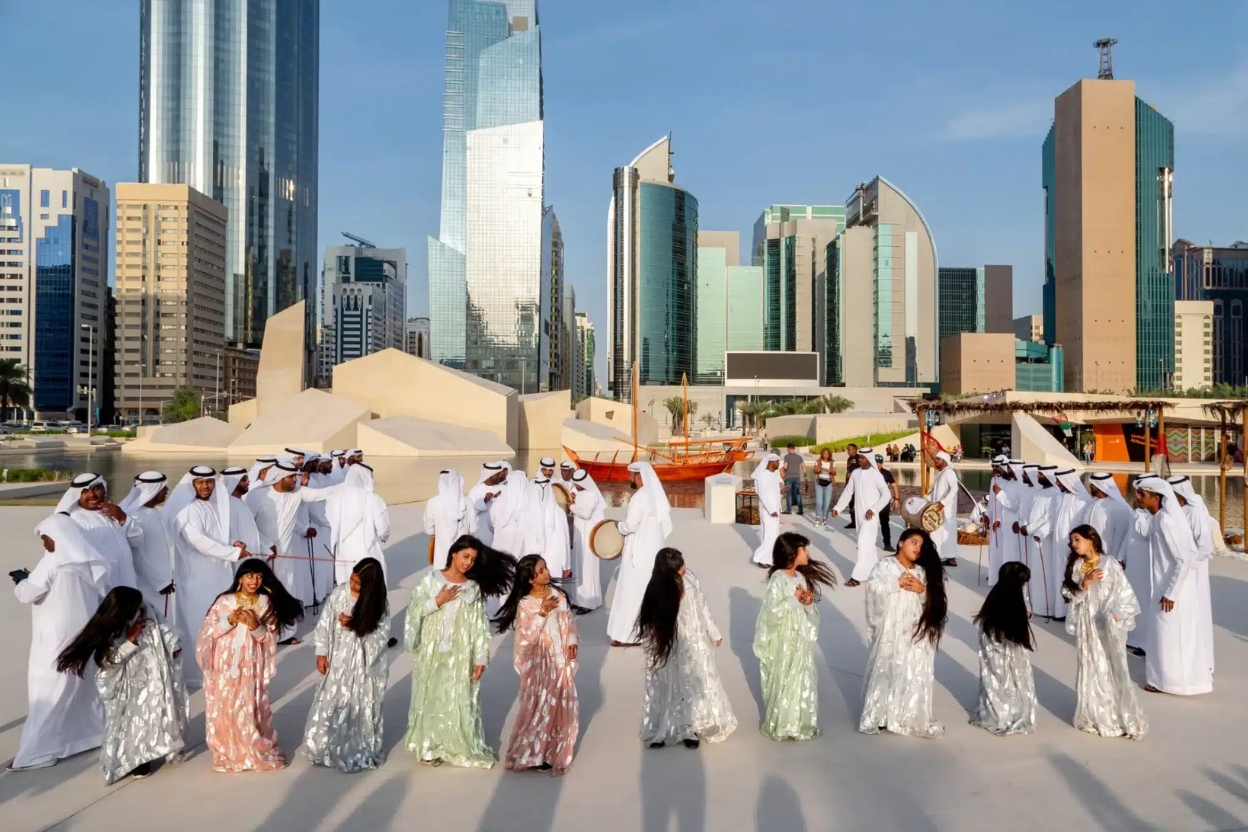
Culture is at the centre of Abu Dhabi’s efforts to grow its tourism industry
Last year’s opening of Louvre Abu Dhabi welcomed visitors to the first universal museum in the Middle East, and Saadiyat Cultural District aims to follow that up by becoming a nucleus for global culture, attracting local, regional, and international visitors with unique exhibitions, permanent collections, productions, and performances.
The first cultural district of its scale and scope in the UAE, Saadiyat’s ambition is to become a global hub, housing the world’s largest single concentration of premier cultural assets. Alongside Louvre Abu Dhabi will be Zayed National Museum and Guggenheim Abu Dhabi, and Mohamed Khalifa Al Mubarak, chairman of Abu Dhabi’s Department of Culture and Tourism (DCT), believes these cultural assets, combined with the emirate’s established museums and institutions, will help develop Abu Dhabi as a global destination for cultural tourism.
“We are committed to fostering a thriving international cultural hub that engages both residents and tourists,” he says, “firstly by highlighting the emirate’s rich cultural diversity and historic heritage, but also by establishing an interactive dialogue between Abu Dhabi and the world, creating its own cultural characteristics around its urban and contemporary landscapes.
“We see enormous opportunity for the travel sector across the Middle East, and Abu Dhabi has all the requirements to seize a share of this development.
“Last year, the MENA region saw a 5% increase in visitors compared to 2016 and we expect this growth path to continue.”
“By 2030, it is estimated that the Middle East will be one of the top three regions globally that will see growth in international travel.”
Abu Dhabi is aiming to welcome an increase in tourist numbers by 500,000 to a record 5.5 million this year and targeting 8.5 million visitors by the end of 2021.
This will still leave the emirate well behind its neighbour, Dubai, which has been focusing on tourism for longer. In 2017, Dubai increased its number of tourists by 6.25 to 15.8 million, putting it on track to meet its target of attracting 20 million visitors annually from 2020.
Abu Dhabi seeks a higher quality traveller over mass numbers and has identified adventure and medical tourism as key areas of focus. It is also investing in technology and innovation to create a seamless and hassle-free traveller experience. Passengers arriving at Abu Dhabi International Airport are now able to obtain tourist visas for 96 hours within 15-30 minutes.
New initiatives include a key asset from DCT’s partnership with Miral, Abu Dhabi’s destinations management company, on Yas Island: Warner Bros. World Abu Dhabi.
This opened in July and is one of the world’s largest indoor theme parks, offering 29 rides, family-friendly attractions and a full calendar of shows and live performances.
Tourism is highly vulnerable to shocks and economic slowdowns but Mr Al Mubarak believes Abu Dhabi is well-prepared.
“Any country must be prepared to handle global political or economic turbulence in order to maintain stability,” he says. “The UAE has long been an oasis of stability and peace in the region. Despite macroeconomic headwinds, more than 2 million guests visited the emirate since the beginning of the year until the end of May. We believe we are on the right track.”
Article Two, Page Three
UAE means business
By Sarah McDonald
Business visitors have a role to play in helping Abu Dhabi meet its visitor’s targets and the emirate is working hard to attract conferences, congress and association meetings in the education, medical, transport, and environmental sectors that have been identified as part of its vision.
Khalifa Qubaisi, chief operating officer of Abu Dhabi National Exhibition Centre, the multi-award winning, 73,000sqm indoor exhibition space says: “We’re seeing large numbers of event organisers coming from the US and Europe, trying to launch new conferences and exhibitions and we’ve been very successful this year.
“We’re pleased that we are achieving our primary objective, which is increasing tourism in Abu Dhabi.
“The environment is very robust. In 2017, we contributed around Dh3 billion ($816.7 million) from cultural impact, hosting a large number of events including the World Diabetes Conference, which was attended by 8,000 delegates. While there’s still tough competition from more established European and US destinations, the UK’s events industry is worth over £40 billion; but there’s no doubt that exhibition spaces like these will attract international interest.
Next year, Abu Dhabi will play host to The World Energy Conference and The International Road Congress Conference, which are both expected to bring in more than 5,000 delegates, while the Special Olympics World Games are also anticipated to be a major draw.”
Mr Qubaisi says: “We have a list of the top 100 international associations that we want to target and we work closely with our partners to approach them and convince them of the importance of holding their event in Abu Dhabi.”
“It is not only about the economic impact; it’s about the transfer of knowledge. When you have a conference of 8,000 delegates discussing the impact of diabetes, it’s a good opportunity for doctors and scientists to exchange ideas.”